

Rising Electricity Demand: Exploring Energy Solutions for Net Zero
본문
The 9th Talk Talk! Carbon Neutrality: Energy Technologies

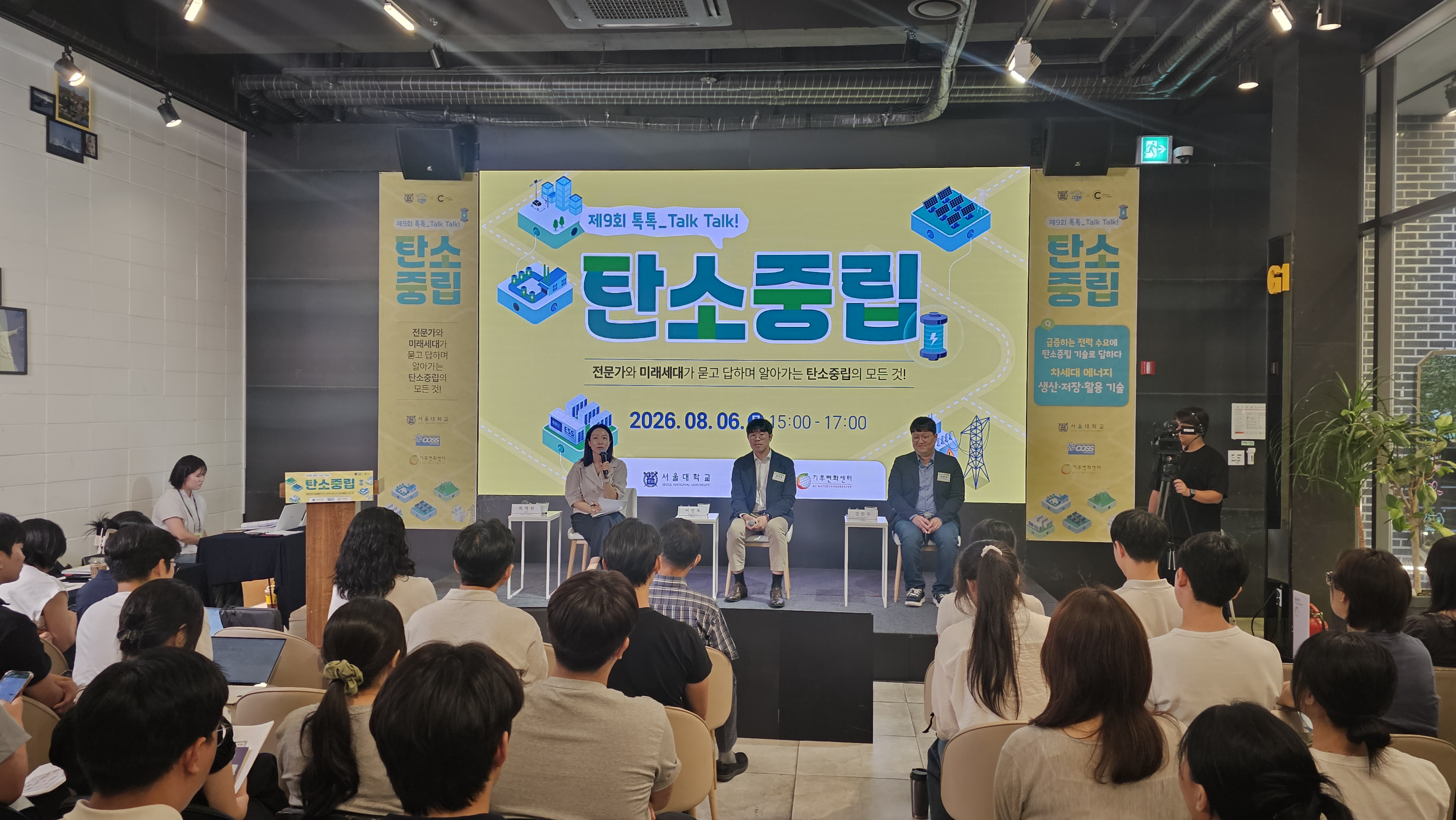
On August 6, the 9th Talk Talk! Carbon Neutrality: Energy Technologies explored the technologies and systems needed to meet rapidly growing electricity demand driven by the expansion of AI and industrial electrification, while advancing toward net zero.
Co-hosted by the Climate Change Foundation and Seoul National University’s Innovation Convergence University Education Program for Energy New Industries, the event featured Professor Jinwook Lee of SNU’s Department of Advanced Convergence Studies and Professor Jinsoo Kang of SNU’s Department of Energy Resources Engineering. The speakers discussed next-generation energy production, storage, and utilization technologies. Participants joined both online and in person, ranging from high school students preparing for university and college students to members of the public and experts in related fields.
Talk Talk! Carbon Neutrality is a public dialogue platform where future generations and experts explore carbon neutrality issues requiring social consensus, share accurate information based on scientific approaches, and engage in open discussions to explore solutions together.
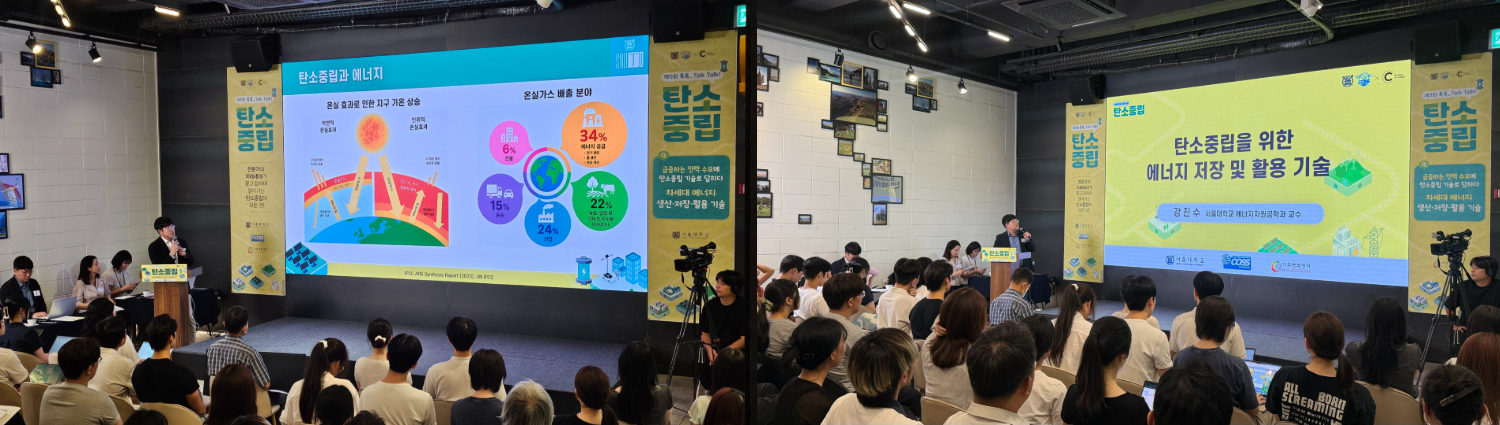
Can We Meet Rising Electricity Demand and Still Achieve Net Zero?
Before the discussion began, the two speakers explored solutions from two different perspectives: energy production and storage.
Professor Jinwook Lee introduced current solar power technologies and next-generation solar cells, including perovskites, in his presentation, “Next-Generation Solar Power Technologies for Net Zero.” He also explored the technological changes needed to expand the use of solar power across a wider range of spaces.
Professor Jinsoo Kang explained the role of energy storage systems (ESS) in making electricity generated from renewable sources available when it is needed, in his presentation, “Energy Storage and Utilization Technologies for Net Zero.” He emphasized that stable use of variable renewable energy, such as solar and wind power, requires consideration not only of generation but also storage and the broader power system.
Following the two presentations, the “Talk Talk” discussion began with questions from participants and live polling.
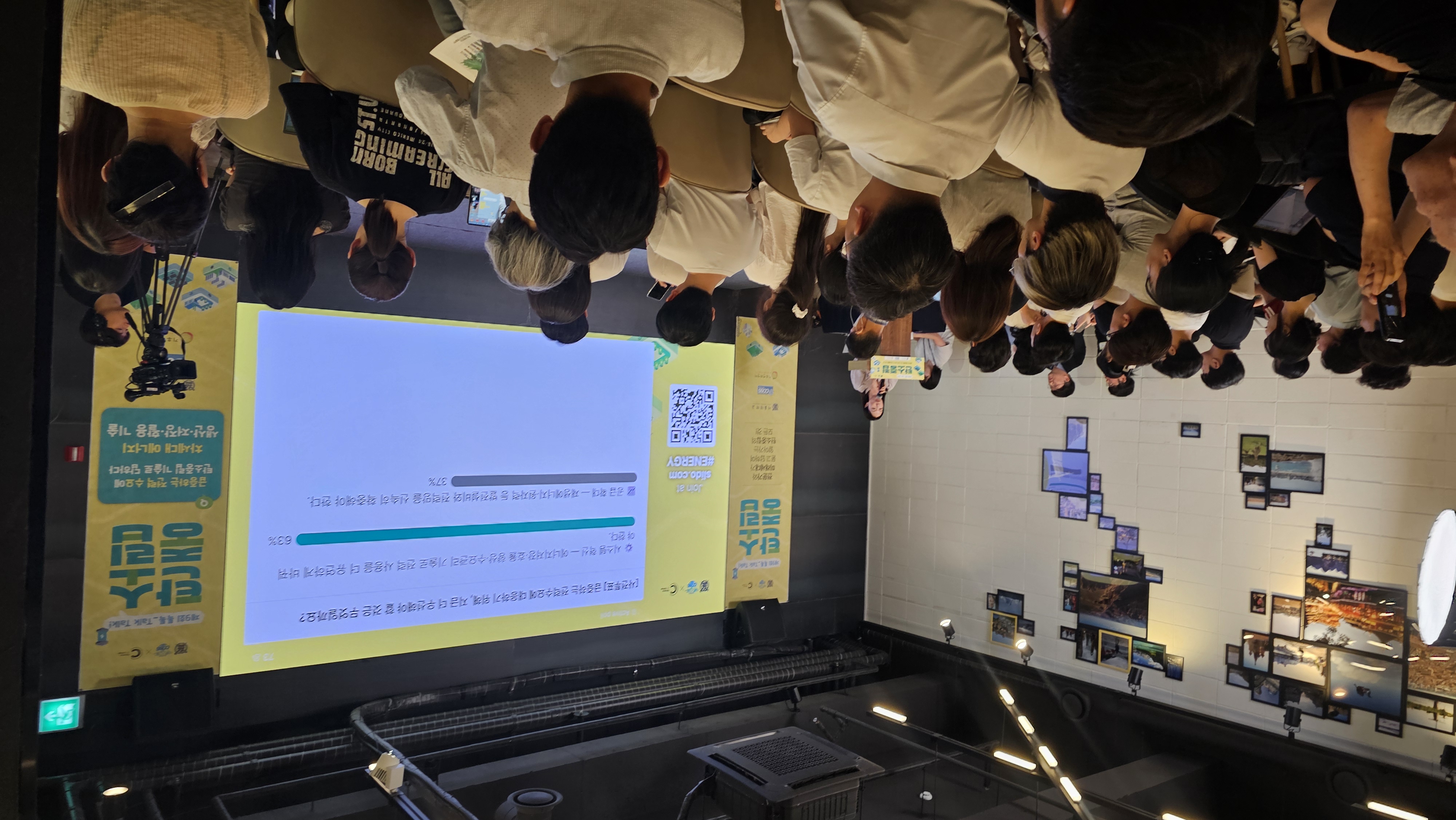
More Generation or System Innovation First?
Early in the event, participants were asked:
“To meet rising electricity demand, which should be prioritized: expanding energy supply or innovating the energy system?”
In the first poll, 63% of participants chose system innovation, while 37% chose supply expansion.
Professor Jinsoo Kang
“If there is not enough electricity being generated, it is difficult to move on to storage and utilization. Expanding supply is therefore necessary. At the same time, the pace of electricity generation and the development of systems to store and deliver that electricity need to be aligned. Ultimately, balance matters more than rapidly expanding just one side.”
Professor Jinwook Lee
“Installing more renewable energy generation facilities alone is not enough. Because solar and wind generation varies with weather conditions, storage systems and power grids must be in place to deliver and use the electricity reliably where and when it is needed.”
After hearing from both speakers, the question naturally shifted from “Which should come first?” to “How can we advance both together?”
In the second poll, participants again expressed the view that expanding energy supply and innovating the energy system should go hand in hand, rather than prioritizing only one.
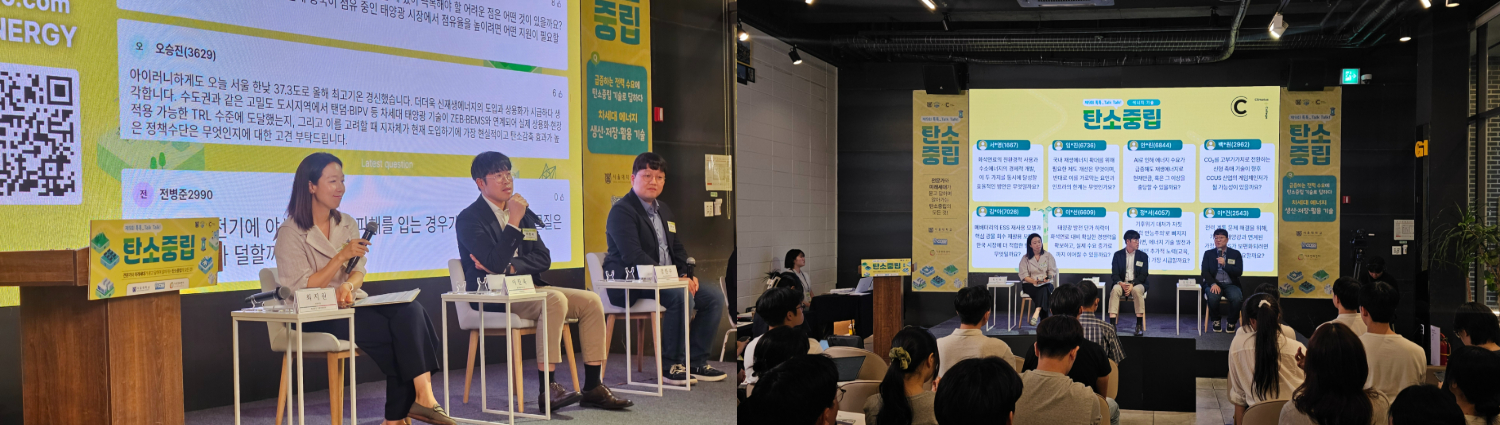
Will Better Technology Solve the Net Zero Challenge?
The discussion also moved beyond technology to the role of policy and society. While new technologies continue to be developed for net zero, both speakers emphasized that technological progress alone cannot solve every challenge.
Professor Jinsoo Kang
“Rather than expecting future technologies to solve all of today’s problems, we need to consider the changes and social choices required now. How society accepts and shares the costs and inconveniences that arise during the transition to a new energy system is also an important question.”
Professor Jinwook Lee
“For new technologies to move beyond the laboratory and be adopted in society, technological development must be supported by public understanding and appropriate policy.”
Ultimately, the energy transition is not simply about developing better technologies. It is also about how society accepts and enables those technologies to spread.
Is There One Right Answer for Net Zero Technologies?
The open discussion continued with questions about technologies such as carbon capture, utilization, and storage (CCUS), which capture carbon dioxide for storage or use.
One question asked:
“Is it better to utilize captured carbon dioxide or store it?”
Professor Jinsoo Kang
“Both technologies—converting carbon dioxide into other materials and storing it underground or in other locations—are possible, but each has its own advantages and limitations. Rather than deciding that one technology is the answer, we need to choose the most appropriate approach based on local conditions, the energy system required, and the level of technological development.”
The questions raised throughout the event ultimately pointed to the same conclusion.
No single solar technology or ESS can solve every net zero challenge. What matters is how we connect generation and storage technologies, power grids, resource circulation, and policy.
The Energy Transition: A Shared Choice Beyond Technology
The 9th Talk Talk! Carbon Neutrality: Energy Technologies went beyond introducing next-generation solar power and ESS to explore the roles these technologies can play in building a net zero society.
Meeting rising electricity demand requires both generating enough power and ensuring that electricity can be stored and delivered effectively. As new technologies are scaled up, the reuse and recycling of resources must also be considered. For technologies to become part of everyday society, supportive policies and public understanding are equally important.
Climatus College will continue to provide a space for experts and citizens to ask questions, exchange ideas, and explore the direction of change that technology, policy, and society can shape together in addressing complex net zero challenges.
#NetZero #CCUS #RenewableEnergy #ClimatusCollege


