

When a City Becomes a Living Lab: Solutions Rooted in Citizens’ Everyday Experiences – 2026 Climatus Open Lecture on Climate Adaptation, Session 2
본문

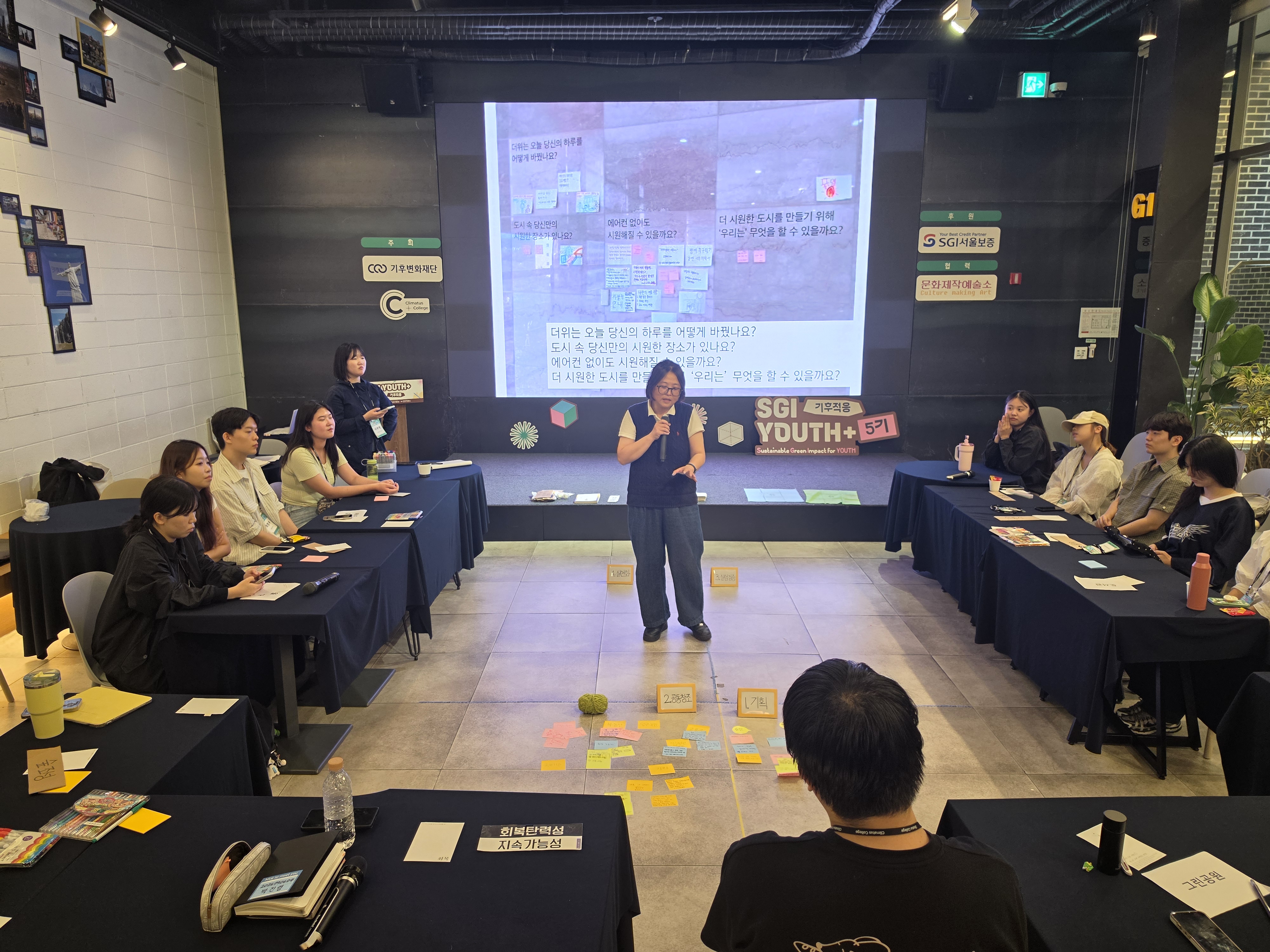
The second session of the 2026 Climatus Open Lecture on Climate Adaptation took place on September 18, bringing together members of the public and SGI YOUTH+ Cohort 5 participants. Jiyeon Kim, a researcher with the Climate Adaptation Living Lab Research Group at Yonsei University, led the session. She explained climate adaptation and living labs using examples from Korea and abroad. Participants then shared ideas for responding to extreme heat in a hands-on workshop.
| Living Labs: Solving Everyday Problems Together
Climate change affects people differently depending on where and how they live. Even during the same heat wave, people with access to air conditioning face very different risks from those who work outdoors. Climate adaptation should therefore begin with the experiences of those directly affected.
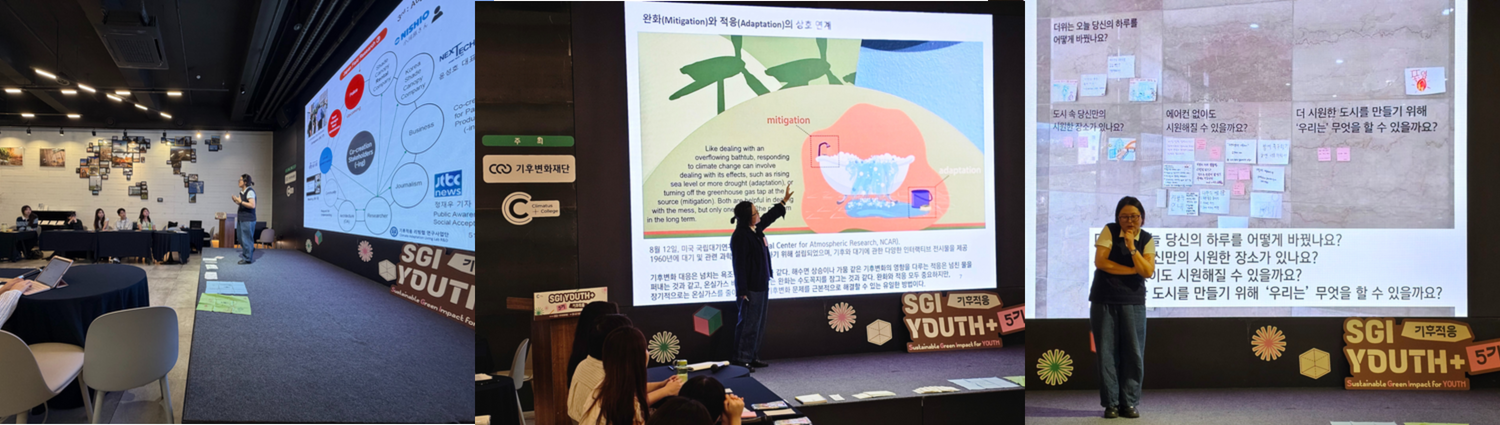
Kim explained that living labs bring citizens, researchers, government agencies, and experts together to identify everyday problems, develop solutions, and test them in real-world settings. Citizens raise questions and propose ideas rather than simply receiving information. Researchers analyze this input and define the problems, while government agencies look for ways to turn the ideas into policy and practice. Art adds another perspective, using images and stories to make climate risks easier to see and understand.
One example was Green Map, which began in New York in 1995 and has since spread to 65 countries. Residents walk or cycle through their neighborhoods to identify local environmental issues, such as extreme heat and flooding. They mark their findings on maps using symbols they create themselves. They then discuss the problems and possible improvements before using the maps to propose policy changes.
The lecture also covered a project in Tokyo’s Shinagawa Ward that tested the effectiveness of shade structures at crosswalks. The case highlighted a key feature of living labs: testing ideas in real-world settings and refining them based on the results.
| Turning Experiences of Extreme Heat into Ideas for a Cooler City
In the workshop, participants used the living lab process to explore responses to extreme heat. The process has four stages: planning, co-creation, testing and validation, and implementation. Planning defines the problem and goal, while co-creation brings together participants’ experiences and ideas. Testing and validation assess whether ideas work in real-world settings, while implementation uses the results to shape policies or activities.
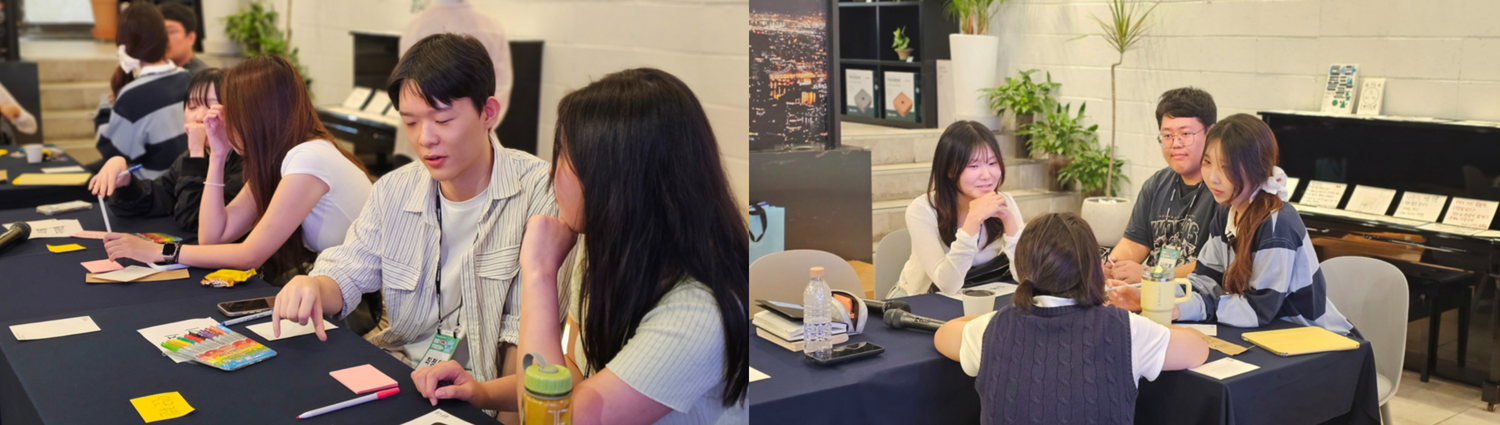
The planning stage began with an open conversation in which participants shared their experiences. The discussion centered on one question: “How can cities stay cooler during extreme heat?” Participants considered how heat had changed their day, where they could cool down in the city, and whether they could stay cool without air conditioning. Before proposing solutions, they identified groups vulnerable to extreme heat and examined the specific challenges these groups faced.
Participants identified older adults, young children, and construction workers as especially vulnerable. They discussed how cities could create more shade and better connect cooling centers, parks, and walking paths. They also considered using libraries, museums, shops, and cafés as places to cool down during heat waves. After discussion, they agreed to focus on construction workers who spend long hours outdoors in the heat and moved on to co-creation.

During co-creation, participants worked in groups representing different stakeholders, including government agencies, construction workers, local residents, real estate professionals, employers, and journalists. They considered what each stakeholder could do to protect construction workers during extreme heat, then brought their ideas together.
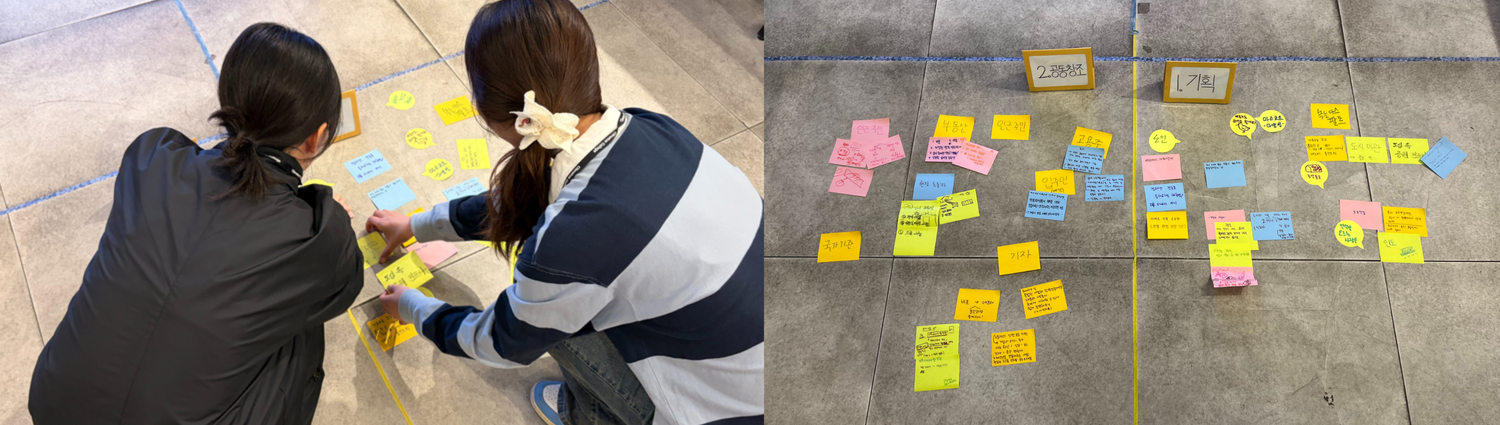
One idea that stood out was “drone shade”—using drones to provide shade where construction workers could rest. Rather than simply expanding conventional shade structures or break areas, the proposal explored how technology could provide shade at worksites. It also reflected the spirit of co-creation: sharing ideas freely and exploring them from different perspectives.
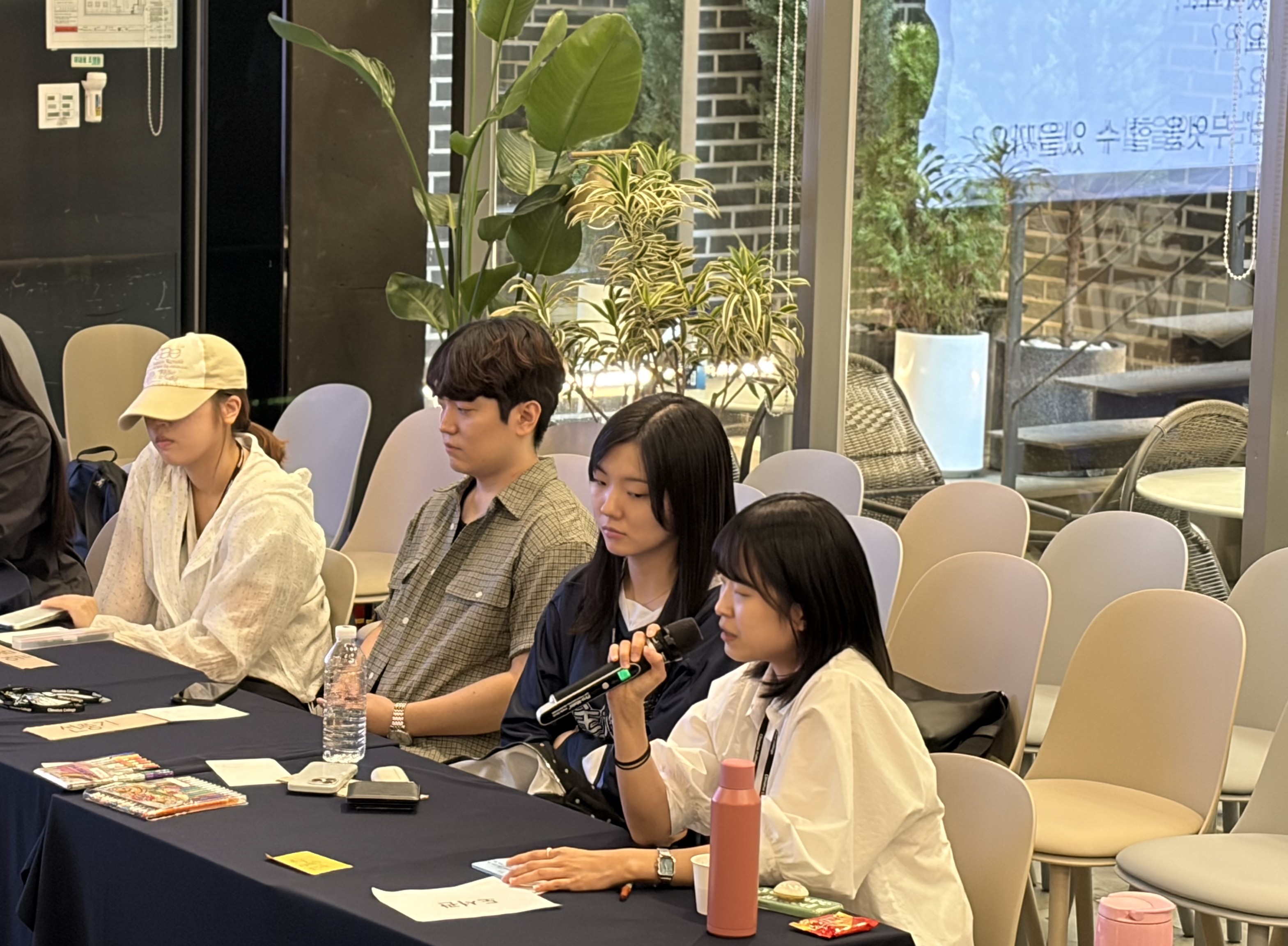
Participants learned that solving a problem requires considering the perspectives and roles of all those involved, including government agencies, workers, employers, local communities, and the media. One SGI YOUTH+ Cohort 5 participant said, “I learned how to approach social issues from different perspectives and communicate with stakeholders to improve policy.”
The workshop showed how personal experience can help identify those most in need of protection and how different stakeholder perspectives can shape shared climate adaptation ideas. The questions and ideas shared that day will inform upcoming SGI YOUTH+ Cohort 5 activities. Through a series of artist-led workshops, participants will take a closer look at the climate risks around them and turn their observations into creative works. We look forward to seeing what climate adaptation ideas emerge as participants view familiar places with fresh eyes.


