

“How Was Your Summer?” Exploring Climate Adaptation in Everyday Life – Climatus Open Lecture on Climate Adaptation & SGI YOUTH+ Cohort 5 Kickoff Ceremony
본문

On September 11, the first session of the 2026 Climatus Open Lecture on Climate Adaptation was held alongside the SGI YOUTH+ Cohort 5 Kickoff Ceremony. The event brought together attendees who had come to the open lecture to learn about climate adaptation and SGI YOUTH+ participants who will work together on projects in the weeks ahead.
At the heart of the day was one question: “What does adaptation look like for you?” With this question as a common thread, participants explored how climate change affects everyday life and related the discussion to their own experiences and everyday spaces.
| “How Was Your Summer?”—Climate Adaptation Begins in Everyday Life
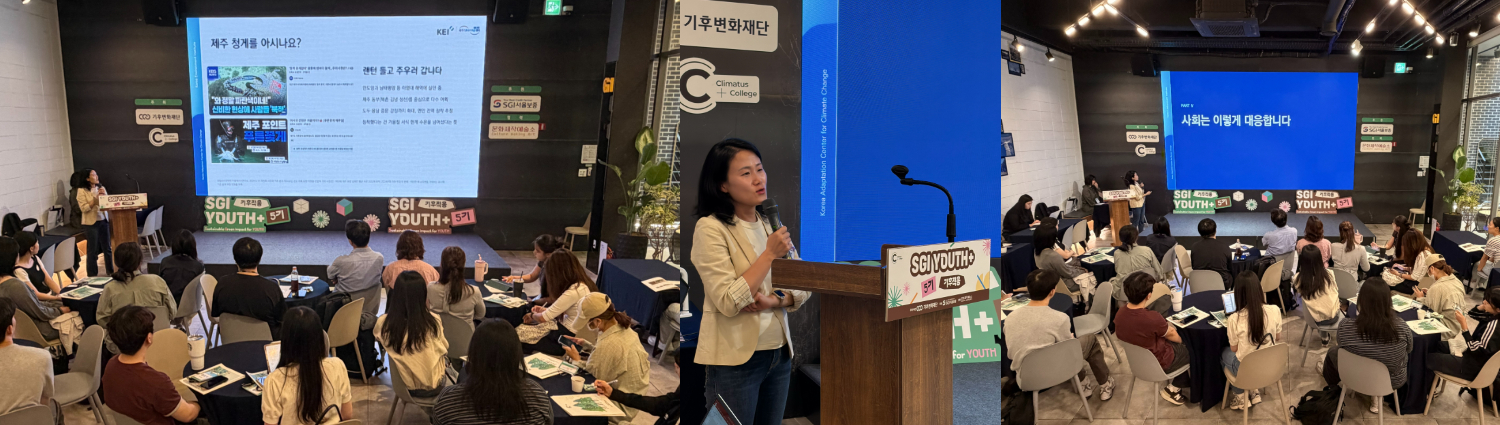
Juyeon Kang, a senior researcher at the Korea Adaptation Center for Climate Change at the Korea Environment Institute (KEI), opened the first session of the Climatus Open Lecture on Climate Adaptation by asking, “How was your summer?”
In 2026, Korea’s average summer temperature reached 25.4°C—1.7°C above the long-term average and the third-highest on record since 1973. Korea also recorded 21.5 heatwave days and 18.2 tropical nights—twice and 2.8 times the long-term averages, respectively. Over the past 30 years, summers in Korea averaged 123 days; over the past decade, the average increased to 130 days. Longer heatwaves, more tropical nights, and sudden downpours show that climate change is no longer a distant concern but is already reshaping the seasons we experience.
Climate change affects our lives in ways that go beyond large-scale disasters. It is reshaping what we wear, what we eat, and the spaces where we live. Longer summers have made clothing designed to keep us cool and sun umbrellas familiar everyday items. Changing temperatures are shifting areas suitable for growing apples northward, while warmer seas are changing the seafood available to us. The signs of climate change can now be seen in our clothes and on our plates.
However, individual choices about clothing and everyday items are not enough to address every risk. In 2026, 3,237 cases of heat-related illness were reported, along with an estimated 28 deaths. Many cases occurred at outdoor worksites and in agricultural fields. Geoje also received 124.5 millimeters of rain in a single hour—an intensity expected only once in 200 years. Heavy rain over a short period can overwhelm existing drainage systems. Adapting to climate change therefore requires more than individual preparation; it also calls for updated infrastructure standards and changes to urban design.
How, then, is climate change affecting what we eat? A subtropical crab known in Korea as cheongge is now being caught in several areas along Jeju’s coast, while domestic catches of walleye pollock—once common on Korean tables—have plummeted. Squid are moving to different waters, and regions suitable for growing apples are gradually shifting northward. Meanwhile, the area of land used to grow highland cabbage, which grows best in cooler conditions, has declined by around 15% over the past decade.
The effects of these changes go beyond higher food prices or reduced access to domestically produced food. Moving orchards to new regions or switching to different crop varieties requires considerable time and investment. When a fish species disappears from local waters, the fishing industry, fish-processing skills, and local livelihoods are also affected. Disaster insurance for farmers and fishers, recovery support, the development of climate-resilient crop varieties, switching to different farmed species, and forecasts of where crops can be grown are all examples of how society is adapting to these changes.
| How Is Adapting Different from Simply Enduring?
“Mitigation and adaptation go hand in hand.”
Kang explained that mitigation addresses the causes of climate change by reducing greenhouse gas emissions, while adaptation helps us prepare for changes already taking place and risks that may arise in the future. Even if emissions were significantly reduced today, the impacts of climate change would continue. This is why both approaches are necessary.
The same climate hazard does not affect everyone in the same way. Consider a fish farm where fish are raised in net pens exposed to high water temperatures. If the farm raises heat-sensitive flounder and lacks the funds and technology needed to switch to a more heat-tolerant species, the risk of serious losses becomes much higher. Understanding climate risk therefore requires us to consider not only the hazard itself but also who or what is exposed, how easily they may be harmed, and whether they can respond.
“The impacts of climate change vary by region. That is why there is no single solution that works everywhere.”
One region may experience drought while another faces record-breaking rainfall at the same time. Instead of applying the same solution everywhere, adaptation must begin with a clear understanding of each region’s specific risks and vulnerabilities.
Simply enduring extreme heat is not the same as adapting to it. Installing shade canopies or connecting green spaces and shaded walkways across a city can reduce climate-related risks. By contrast, relying only on air conditioning can increase energy use and greenhouse gas emissions, creating new risks. This is a form of “maladaptation.” Effective adaptation means asking not only whether an action solves an immediate problem but also whether it could create new risks elsewhere.
| How Is Society Preparing for Climate Risks?
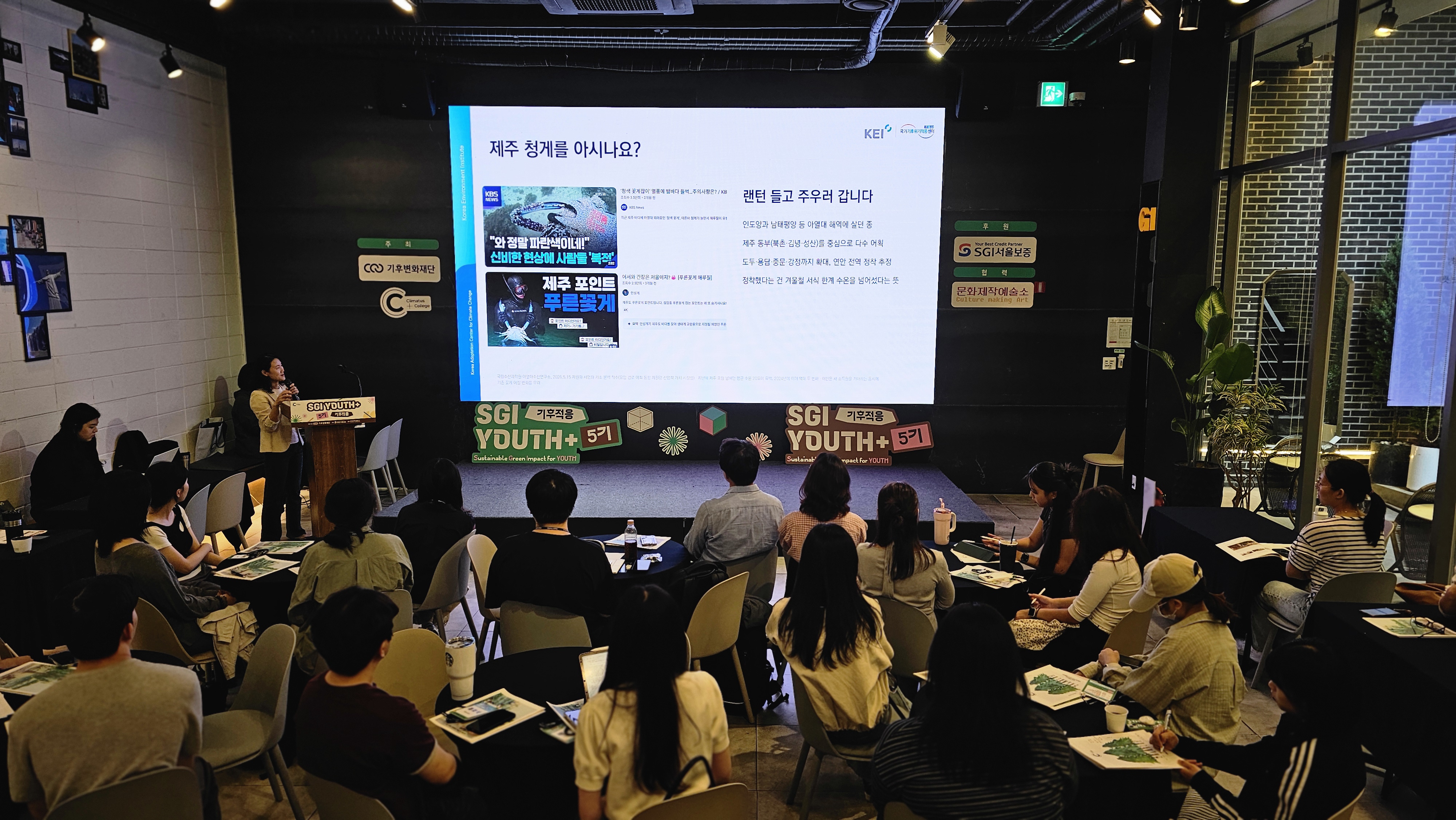
Every five years, Korea develops a National Climate Crisis Adaptation Plan. Central and local governments and public institutions are responsible for carrying it out. Currently, 18 ministries, 17 metropolitan and provincial governments, 226 cities, counties, and districts, and 62 public institutions prepare their own adaptation plans and review their progress each year.
However, budgets and resources are limited, so not every facility can be upgraded to withstand extreme heat and heavy rainfall. It is also difficult to predict exactly when and where climate-related events will occur or how severe their impacts will be. Climate adaptation therefore means prioritizing protection for the people and places that face the greatest risks and have the least capacity to respond. It also requires society to decide together how limited resources should be used.
A lively Q&A followed the lecture. The discussion showed that climate adaptation is not about finding a single correct answer. Instead, it is an ongoing process of asking what we should protect and how we should respond as our environment continues to change.
| What Does Adaptation Look Like for You?
SGI YOUTH+ is a program that helps young people build the knowledge and skills needed to take climate action, contribute to social change, and shape a sustainable future. Cohort 5 focuses on climate adaptation. Participants will identify climate risks in their everyday lives and surroundings, then work with artists to turn their ideas about adaptation into artworks.
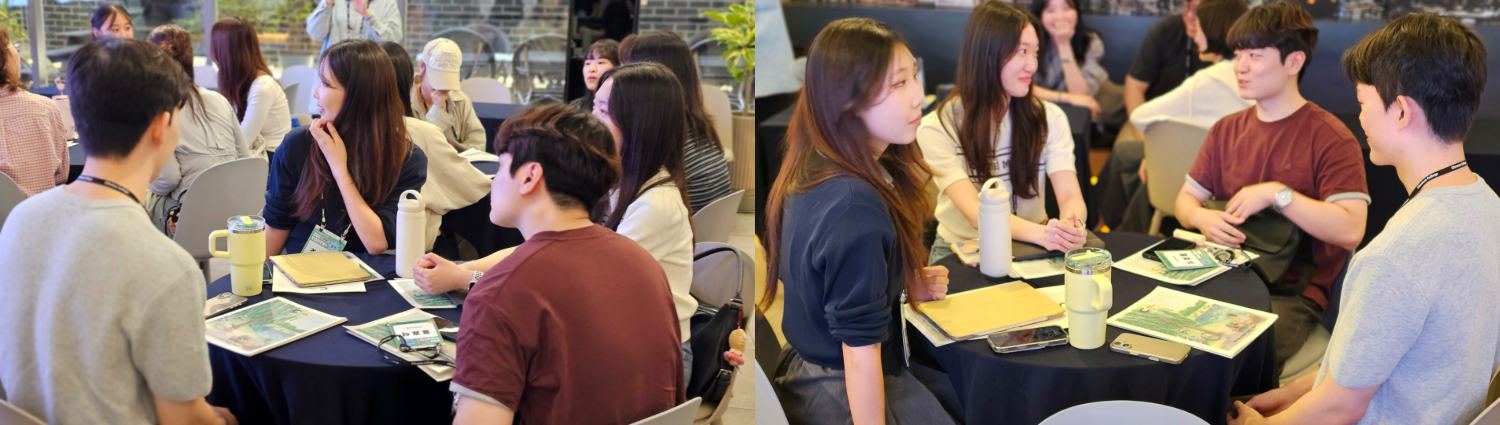
Before the main activities began, participants introduced themselves at their tables and shared their fields of study, interests, and the roles they hoped to play on their teams.
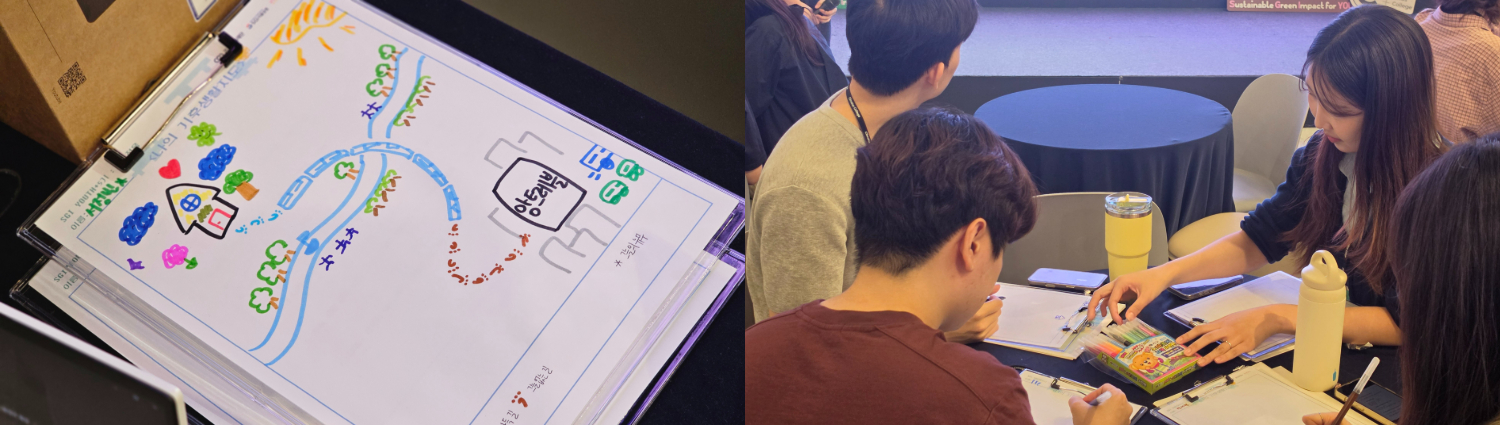
They then created their own “Everyday Climate Maps” by retracing the route from home to the venue. They developed their own map keys, using different colors and symbols to show where they felt hot or cool, where they encountered sunlight or shade, how wide the roads felt, and how long the journey seemed. Ordinary travel routes thus became unique maps shaped by each participant’s experience.
Rather than drawing the route exactly as it appeared, participants recorded the sensations they remembered along the way. This encouraged them to pay closer attention to heat, shade, and difficulties in getting around on familiar routes they would normally travel without much thought.
| Turning Cities into Living Labs and Everyday Observations into Art
On September 18, the second session of the 2026 Climatus Open Lecture on Climate Adaptation, “Pilot Cities: When a City Becomes a Living Lab,” will be led by Jiyeon Kim, a researcher at Yonsei University’s Climate Adaptation Living Lab Research Group. The session will explore how citizens can test their ideas in everyday life and turn them into real change.
Participants will then begin a creative arts mentoring program with a visit to Seoul Upcycling Plaza and team-building activities. We hope you will continue to follow SGI YOUTH+ Cohort 5 and see how the observations recorded on these maps turn into climate adaptation ideas and artworks.


