

The 2nd Garden City Seminar in the Era of Climate Crisis — Climate Adaptation and Green Infrastructure Urban Cases —
본문
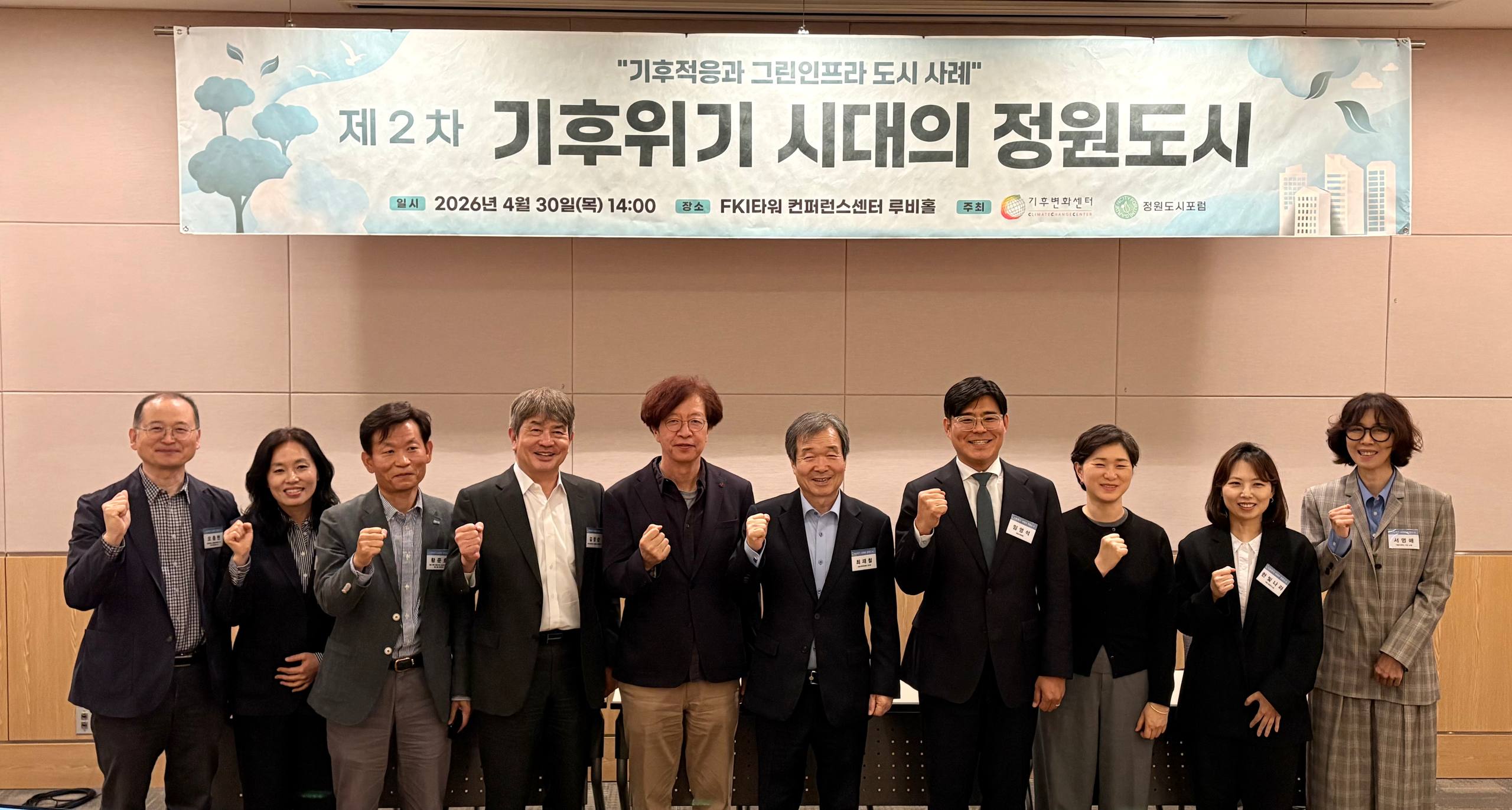
The 2nd Garden City Seminar in the Era of Climate Crisis
— Climate Adaptation and Green Infrastructure Urban Cases —
SEOUL, Korea — As the climate crisis intensifies, cities are confronting complex risks including heatwaves, torrential downpours, urban flooding, the urban heat island effect, and ecological changes. Climate disasters are no longer a future possibility but a structural threat to urban life and survival, necessitating a fundamental redesign of existing urban planning and infrastructure systems.
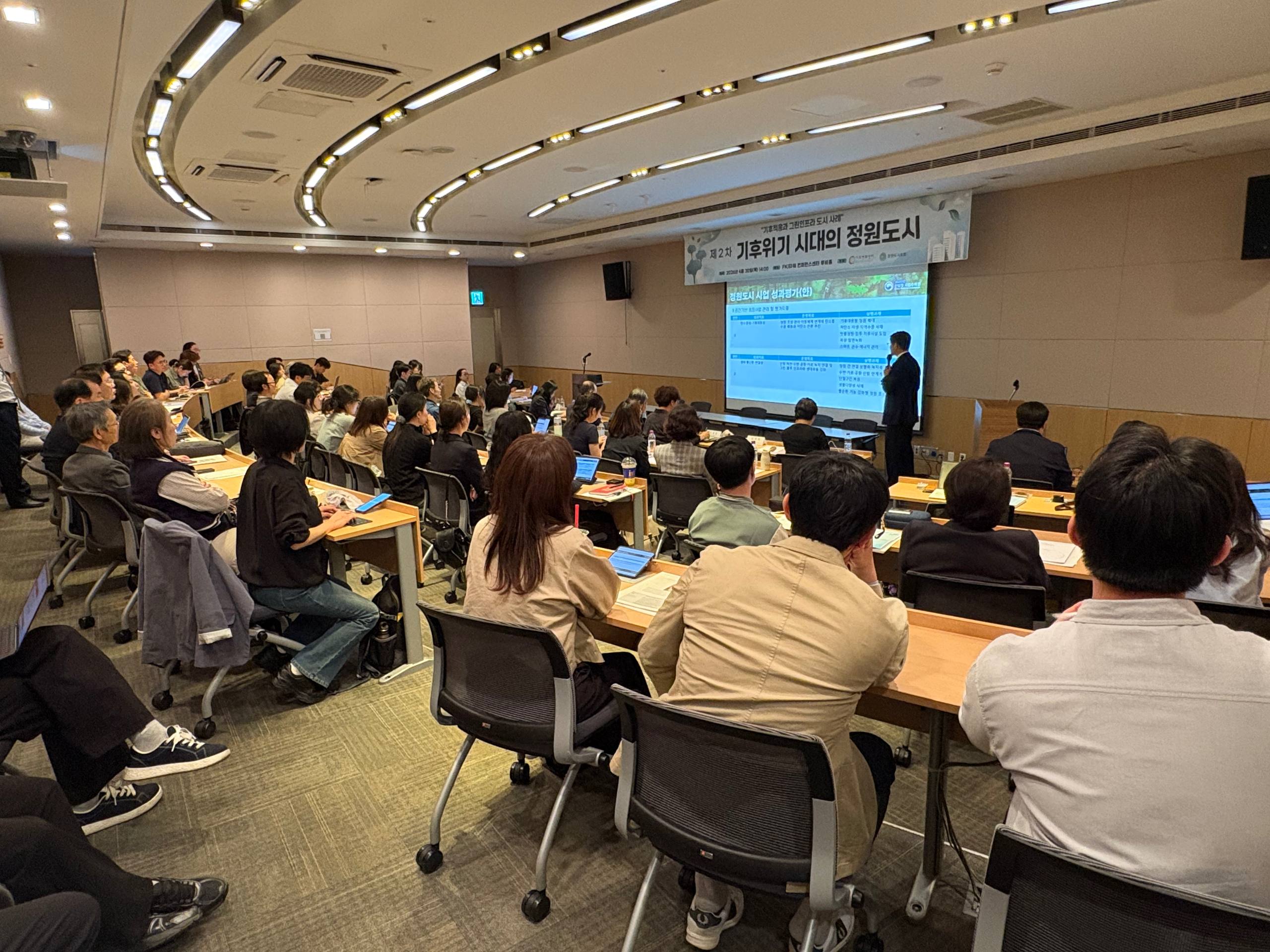
Amidst this trend, Nature-based Solutions (NbS) such as gardens, urban green spaces, and waterfront areas are gaining attention as critical infrastructure that enhances urban climate adaptability and resilience, moving beyond mere landscaping. In response, the Climate Change Center and the Garden City Forum co-hosted the "2nd Garden City Seminar in the Era of Climate Crisis" on April 30th. Under the theme of "Climate Adaptation and Green Infrastructure Urban Cases," the seminar discussed the policy expansion potential and implementation directions for garden cities.
In his opening remarks, Choi Jae-chul, Chairman of the Climate Change Center, emphasized, "Gardens and urban green spaces are no longer just recreational areas but climate infrastructure that enhances urban resilience and adaptability." He called for climate adaptation strategies that protect citizens' lives and urban survival to be pursued concurrently with carbon neutrality policies.
Keynote Presentation: How Berlin Designs Climate-Adaptive Cities
Jeong-hee Ko, CEO of Third Space Berlin Environmental Academy
CEO Ko introduced Berlin’s climate-adaptive urban policies, highlighting how the city is responding to unprecedented heatwaves and floods. Berlin has established a multi-layered institutional framework, including the Federal Climate Funding Act and the Climate Adaptation Act.
Notably, Berlin defines street trees as essential climate-adaptive infrastructure, aiming to plant one million trees by 2040. The city is integrating "15-minute city" concepts, blue-green infrastructure, and sponge city strategies to redesign its entire structure around climate variables. Ko emphasized the need for urban strategies that prioritize living soil, biodiversity, and water circulation over simple greening projects.
Presentation 1: A New Transition in Urban Policy
Ji-young Shin, Head of Climate Adaptation Policy Office, Korea Environment Institute
Shin diagnosed a rapid shift in national policy from greenhouse gas mitigation to adaptation. She stressed that mitigation and adaptation must be complementary and that urban planning must be integrated with green space policies. She also highlighted the need for a collaborative foundation between central and local governments and civil society to bridge the gap between policy and execution.
Presentation 2: From Garden City to ‘City in Nature’
Young-seok Lim, Director of the Korea National Arboretum
Director Lim shared Singapore’s transition to the "City in Nature" concept. While 26 Korean local governments have declared themselves garden cities, Lim noted that many remain focused on quantitative achievements. The Korea National Arboretum proposes new evaluation metrics—carbon neutrality, ecological connectivity, and equity—and is experimenting with rain gardens and pollinator gardens to promote sustainable climate adaptation using native plants.
Presentation 3: Energy Future Cities and Green Infrastructure
Jun-ho Hwang, Head of AI Infrastructure at Solaseado
Hwang introduced "Solaseado," a future city in HaeNam, Jeollanam-do, which combines renewable energy infrastructure with smart city elements. As RE100 demand grows, regional energy cities are becoming vital. Solaseado promotes integrated development by combining solar power plants, "Gardens of the Sun," and autonomous EV infrastructure with extensive urban forests.
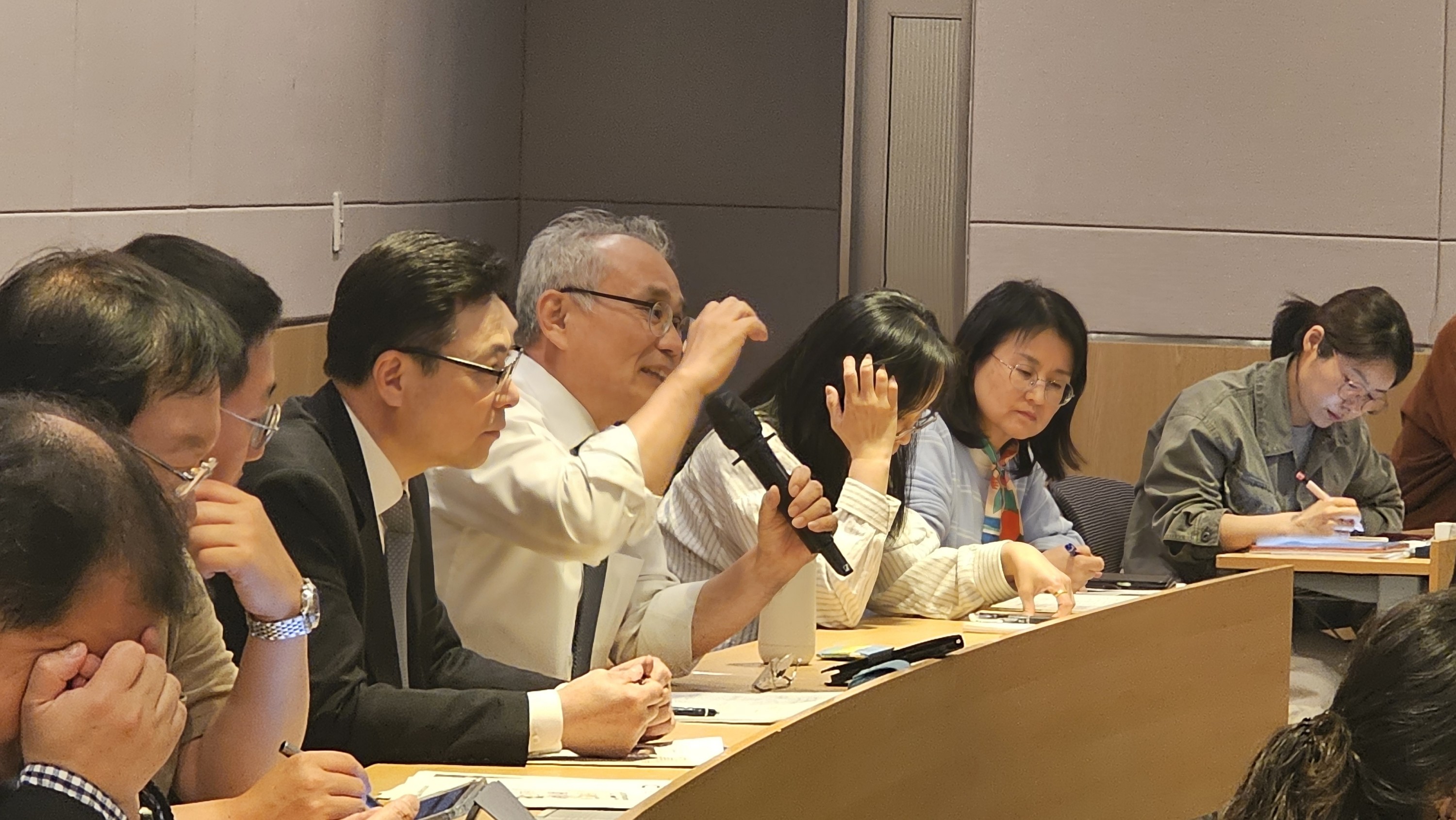
Panel Discussion: Reconnecting Climate Adaptation and the Future of Cities
Moderated by Kim Chang-seop, Co-representative of the Climate Change Center, the panel included experts from academia and industry. The discussion reached a consensus that gardens and urban forests must be redefined as core infrastructure.
Key topics included:
• Native plant-based strategies and Nature-based Solutions for social issues.
• Green space equity and addressing the "climate gap."
• Citizen-participatory governance and practical strategies like "road dieting" and "mini-forests.“
The panelists suggested that urban greening must transcend environmental effects to foster community recovery and social sustainability.
A New Approach to Redesigning Urban Resilience
This seminar successfully redefined gardens and urban green spaces as core infrastructure for urban resilience. By connecting international cases with domestic strategies, it presented a new urban model that integrates climate adaptation and carbon neutrality.
The Climate Change Center plans to continue collaborating with local governments, experts, and industry to spread a Korean-style climate adaptation model based on garden cities and Nature-based Solutions.


-
Youth Connections Driving the Impact of Climate Action: U-SAVERS at the “Youth Climate Impact Alliance” Session of the Ban Ki-moon Foundation’s BGI Platform Launch Event
목록
-
기후적응 인프라로서의 정원도시, 도시의 회복력을 다시 설계하다


