

[Policy Field RE:VIEW] The New Administration’s Climate Policy: Core Pillars of Ambition, Coherence, and Execution
본문
[Policy Field RE:VIEW] The New Administration’s Climate Policy: Core Pillars of Ambition, Coherence, and Execution (May 8 Policy Roundtable for Practical Proposals)
- The Climate Change Center, established in 2008 as Korea’s first non-governmental organization dedicated to climate change, held a policy forum ahead of the new government's inauguration to propose directions for climate and energy policies.
- Discussions centered on three major tasks: ▲Establishing the 2035 NDC, ▲Industrial and energy transitions, ▲ Governance reform.
- Emphasis was placed on the need for achievable reduction targets, coherent institutional design, and implementable strategies.
■ Establishing the 2035 NDC and Transitioning Climate-Energy Governance: Tasks for the New Government
In his welcome remarks, Jai-chul Choi, Chairman of the Climate Change Center, stated that the new government stands at a critical juncture for designing and implementing climate and energy transitions. He emphasized that the 2035 NDC should serve as an opportunity to develop executable strategies grounded in scientific evidence and policy coherence. Citing examples from Germany, France, and the UK, he suggested that Korea needs to reform its governance to foster cross-ministerial cooperation beyond fragmented responses.
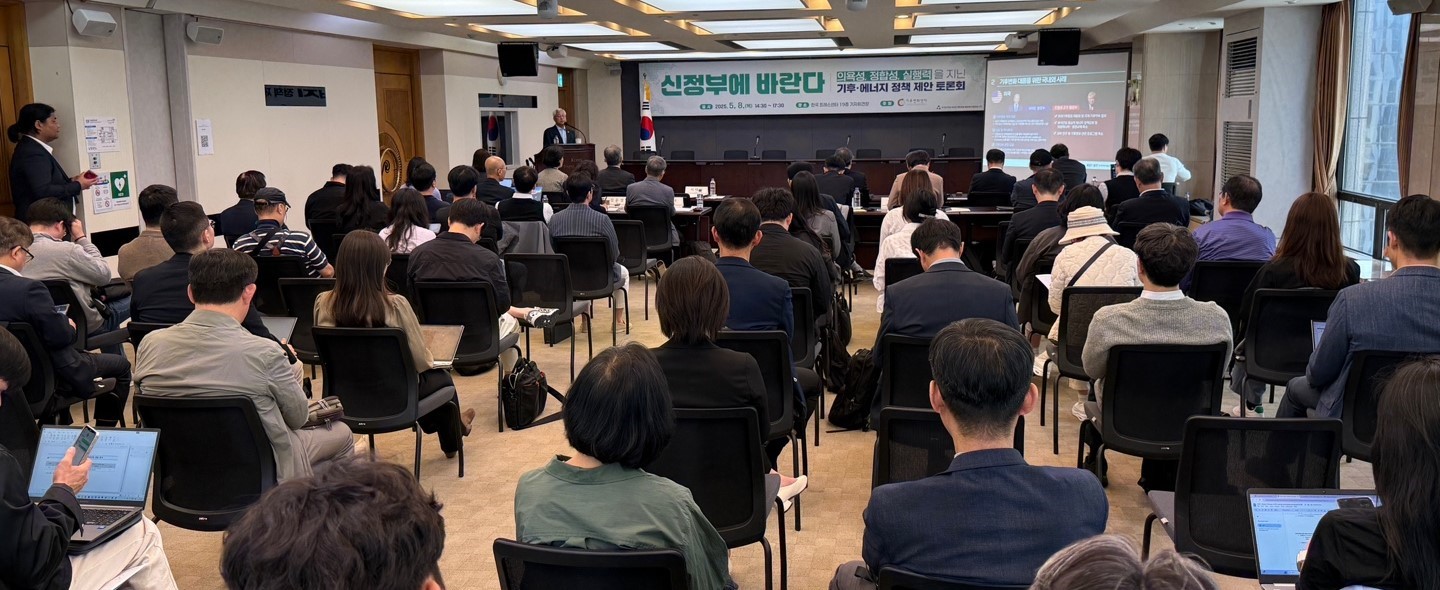
In his keynote speech, Tai Sik Lee, President of the Korean Federation of Science and Technology Societies (KOFST), described the climate crisis as a complex challenge requiring a science and technology-based, society-wide response. He emphasized that science and technology should be the starting point and verification tool for climate policy, calling for data-driven policy design and the reorganization of strategic planning functions across the government.
He proposed a three-pronged approach to addressing the climate crisis: science-based policy, participation led by local governments and civil society, and a just transition.
Additionally, he introduced the concept of the "Horizon Asia" platform, which combines technology demonstration and green industrial ecosystem design, to position Korea as a hub for climate cooperation in Asia.
Experts including Professors Sang Jun Lee (Seoul National University of Science and Technology), Young-Tak Cho (Hanbat National University), Bong Guel Chun (University of Seoul), Sung Jin Kang (Korea University), and CEO Hyoeun Jenny Kim (Global Industry Hub) shared the view that the existing NDCs may have been overly ambitious and somewhat lacking in robust scientific and policy foundations.
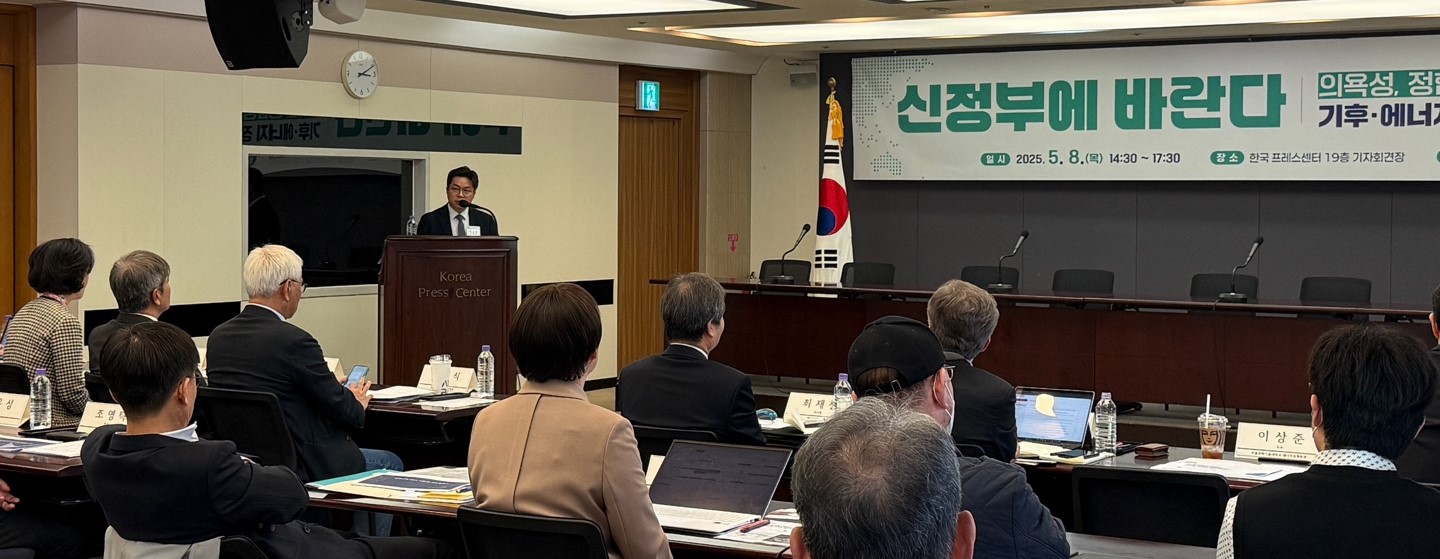
▪ Professor Sang Jun Lee criticized the additional 5-million-ton reduction target in the power sector for 2023 as a figure presented without feasibility review, suggesting the importance of designing realistic transition pathways rather than setting symbolic numerical goals.
▪ Professor Young-Tak Cho pointed out issues of double counting in the power sector's reduction figures.
▪ Professor Bong Guel Chun highlighted the need for a realistic understanding of the burdens and limitations Korea faces as a manufacturing-centric economy in pursuing independent reductions.
▪ Professor Sung Jin Kang emphasized the importance of a linear transition pathway towards 2050 carbon neutrality.
▪ CEO Hyoeun Jenny Kim noted that the NDC should be viewed not as a single goal but as part of a mid-to-long-term strategy extending to 2040–2050, requiring not only social consensus but also political leadership and decisive commitment in policy design.
Experts stressed the need to redesign carbon neutrality as a new growth strategy rather than a threat to industrial competitiveness. Professors Sang Jun Lee, Director Yu-jin Lee (Institute for Green Transformation), CEO Yunsoung Kim (Energy and Space Co., Ltd.), and CEO Hyoeun Jenny Kim emphasized the necessity of government-led financial investment, system-level redesign, and feasible industrial strategies.
▪ Professor Sang Jun Lee cited Japan’s GX strategy—an example of approximately 1,700 trillion won in public-private investment over 10 years—as a case that highlights the importance of securing additional resources, rather than simply reallocating existing budgets, to make industrial transition a new growth engine. He also emphasized the global competitiveness of Korea’s unique hydrogen-based steelmaking technology.
▪ Professor Young-Tak Cho questioned the realism of electric vehicle adoption targets, suggesting that indirect reduction strategies and transportation efficiency should take precedence.
▪ CEO Hyoeun Jenny Kim called for a redefinition of industrial competitiveness from the perspective of decarbonization.
▪ Director Yu-jin Lee warned that rapid aging could weaken investment capacity for transition, advocating for government-led planning similar to the EU's REPower and China's 1+N strategies.
▪ Professor Bong Guel Chun noted that while decarbonization requires massive investment, the public sector lacks fiscal capacity, and the private sector hesitates to invest due to inconsistent policies and lack of trust. Therefore, regulatory design reflecting market autonomy and incentives, along with a culture that doesn't deter investment by reclaiming profits from successful private entities, is necessary.
To enhance the execution of transition policies, discussions highlighted the need to reorganize government structures, market design, and policy consistency. Professor Chulwoo Baek (Duksung Women’s University) proposed institutional reforms to enhance the execution of climate and energy policies—such as strengthening coordination between the Ministry of Trade, Industry and Energy and the Ministry of Environment to ensure coherence between goals and implementation, maintaining policy consistency unaffected by political variables, and separating the functions of the Korea Power Exchange and the Electricity Regulatory Commission to enhance market trust.
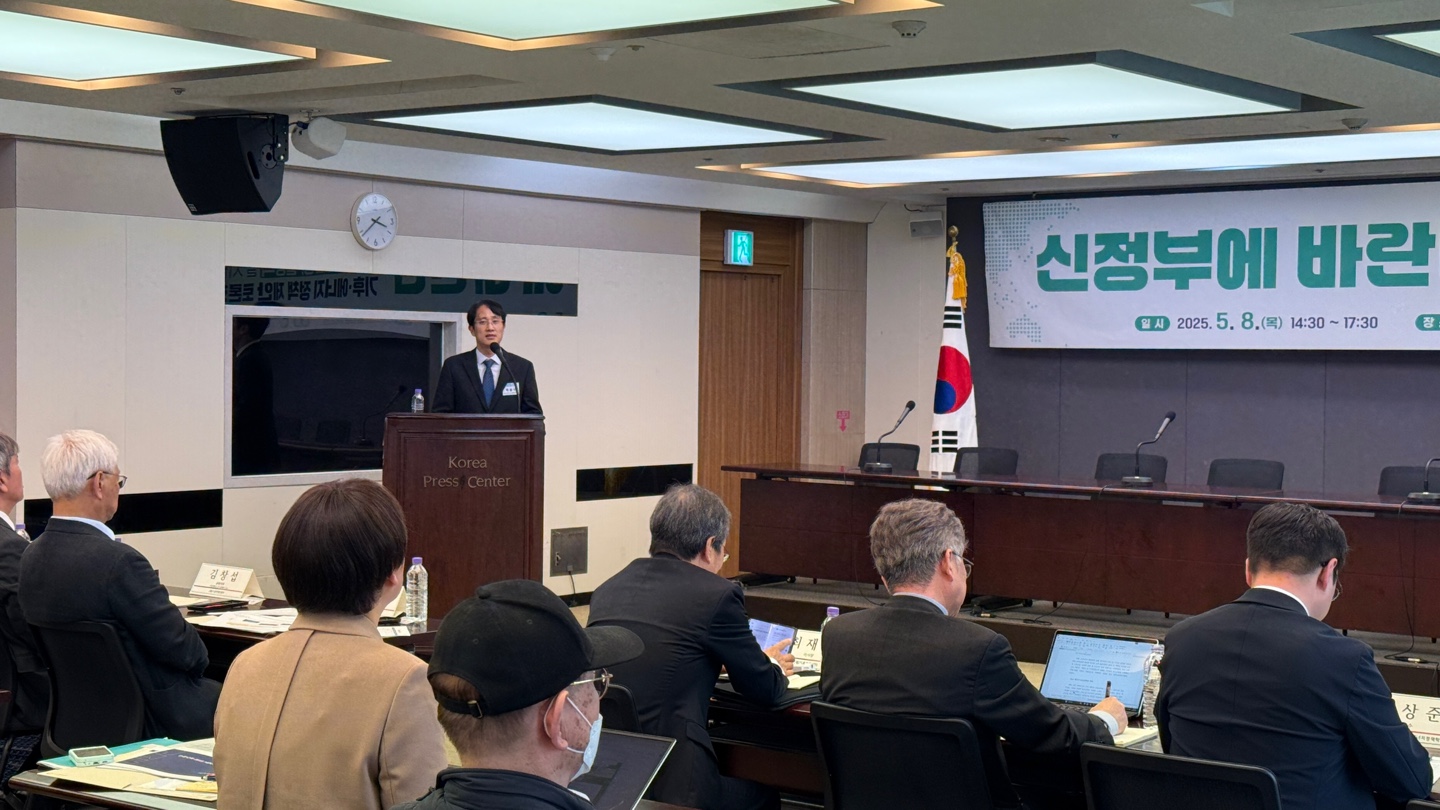
Key proposals from the ensuing discussion included:
▪ Professor Young-Tak Cho stated that under the current government-controlled electricity pricing system, achieving carbon neutrality is unlikely, and called for a shift to market-based pricing system.
▪ Director Yu-Jin Lee proposed establishing a “Climate Economy Department” within the Ministry of Ministry of Trade, Industry and Energy, arguing that placing it inside the existing ministry would better consolidate authority over industrial, energy, and climate policies and enhance policy coherence.
▪ CEO Yunsoung Kim emphasized the need for flexible institutional design and stakeholder consultation structures.
▪ Professor Sung Jin Kang proposed designing price mechanisms and incentives to encourage private sector participation.
▪ Professor Sang Jun Lee emphasized that data accuracy is critical in policy design, and warned that overly complex ESG regulations—such as mandatory climate disclosure and supply chain due diligence—could hinder business operations. He stressed that such regulations should remain simple and predictable.
There was a consensus that what the new government needs ahead of establishing the 2035 NDC and industrial and energy transitions is not "ambitious numbers" but executable strategies.
Participants emphasized that robust implementation frameworks matter more than numeric targets, calling for stronger government planning capacity and whole-of-society cooperation mechanisms. Additionally, proposals were made for science-based policies, market incentive designs, promotion of private sector participation, and coherent institutional reform plans.
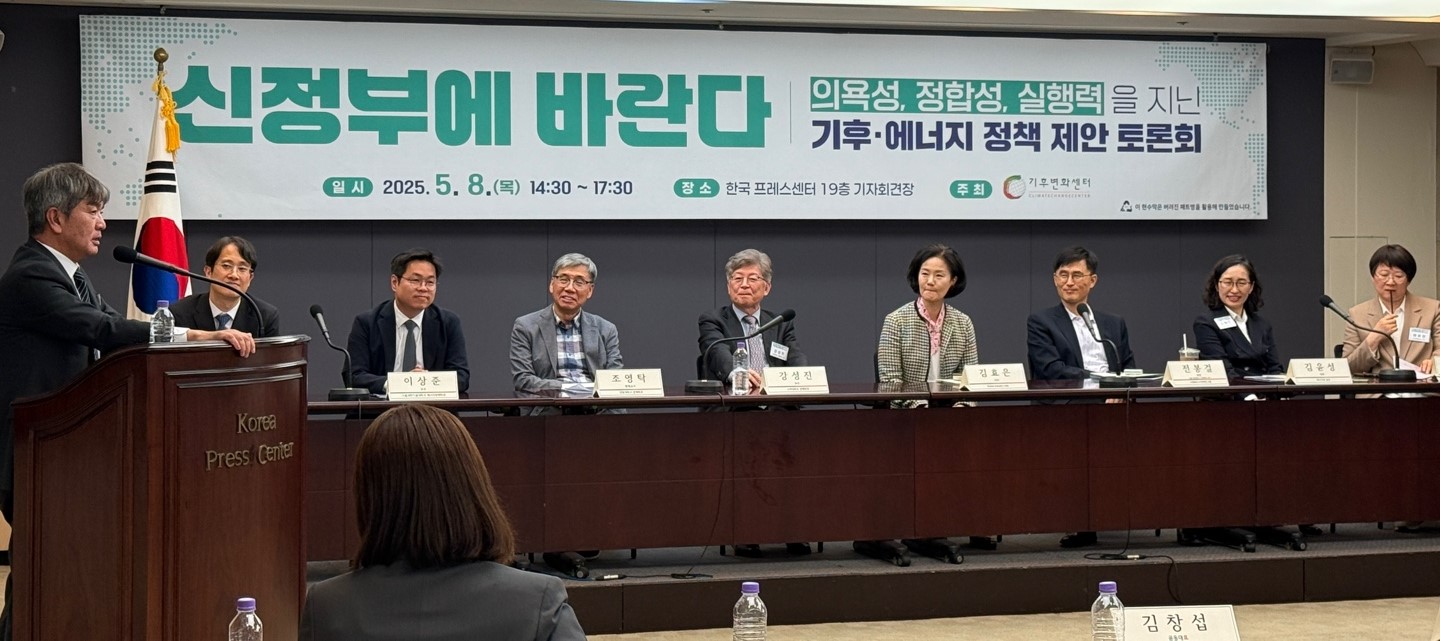
The Climate Change Center plans to continue its policy research and public engagement efforts to advance implementable policies and strengthen public acceptance. In the second half of this year, a policy forum tentatively titled "Feasible Reductions, Sustainable Implementation: Designing NDC, ETS, and Electricity Pricing" will be held to discuss the industrial sector’s realistic emission reduction potential and practical implementation strategies, ahead of the implementing of the 4th phase of the Emissions Trading Scheme (2025-2035), which should align with the 2035 NDC.
We welcome your interest and would greatly value your perspectives.
Note: For further details, the proceedings are accessible on the Climate Change Center’s website


