

[이달의 이슈] 기후변화에 맞서 싸우고 있는 우리에게 메탄은 왜 중요한가?
본문
기후변화에 맞서 싸우고 있는 우리에게 메탄은 왜 중요한가?
Why does Methane Matter in our Fight Against Climate Change?
개도국협력팀 로즈윈 발렌수엘라 연구원
Global Development Cooperation Team Researcher Roswin Valenzuela
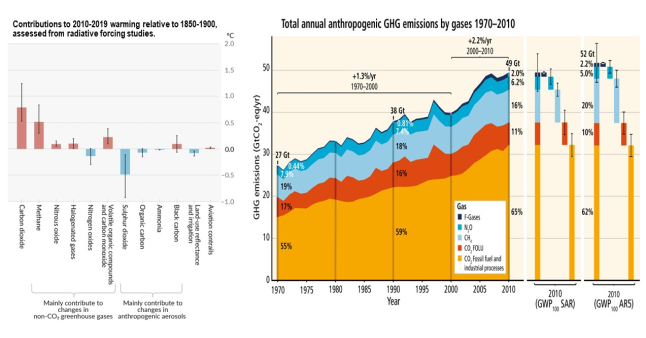
메탄(CH4)은 이산화탄소( CO2)에 비해서 지구온난화지수(GWP)가 80배 큰 강력한 온실가스이다. 대기 중에 머무는 시간이 짧음에도 불구하고, 지구온난화에 대한 이 짧은 기간의 영향은 이산화탄소에 비해 훨씬 강력하다. 환경보호기금(Environmental Defense Fund)에 따르면 오늘날 지구온난화의 최소 25%는 인간의 활동에서 비롯된 메탄에 의해서 야기된 것이라고 말한다. 메탄 배출은 해를 거듭할수록 커지고 있다. 심지어 팬데믹 기간에 지역봉쇄와 함께 이산화탄소 배출은 감소하였음에도 불구하고 메탄의 배출은 증가하였다고 한다. 2020년의 미국의 국립해양대기청(Unuted States National Oceanic Atmospheric Administration, NOAA)의 예비조사에서는 메탄 농도의 증가가 14.7ppb로 신기록을 달성했음을 보여주었으며, NOAA는 2020년 12월 전 세계 메탄 농도의 평균이 1892.3ppb로 2000년 대비 6% 증가하였다고 기록했다.
Methane (CH4) is a powerful greenhouse gas with a Global Warming Potential 80 times greater than carbon dioxide (CO2). Despite its shorter atmospheric lifetime, its short-term impact on global warming is much higher than carbon dioxide. According to the Environmental Defense Fund, at least 25% of today’s global warming is driven by methane from human actions. The emissions from methane continue to grow over the years. Even during the pandemic, despite the imposed lockdowns that have decelerated the carbon dioxide emissions, methane emissions remained increasing. Preliminary analysis of the United States National Oceanic and Atmospheric Administration (NOAA) in 2020 showed a record-breaking increase of methane by 14.7 parts per billion (ppb). NOAA also recorded the global average burden of methane for December 2020 at 1892.3 ppb which is a 6% increase since 2000.
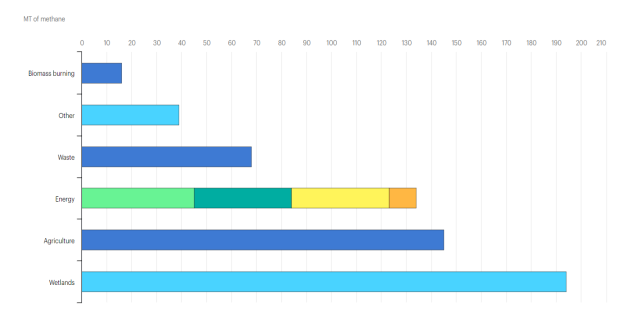
메탄 관련 연구에 따르면, 전체 메탄 배출의 최소 50%가 인간의 활동에서 발생했음을 보여준다.
자연습지(Natural wetlands)가 가장 큰 원인으로 꼽히고 있으나 농업, 에너지, 산업, 폐기물 또한 메탄 배출의 핵심적인 원인으로 집계된다.
Studies on methane suggest that at least 50% of the total methane emissions are from human activities. Agriculture, energy, industry, and waste are some of the key sources of methane emissions; however, natural wetlands remain its largest source.
▪ 농업 – 소, 돼지, 양, 염소와 같은 국내 가축들의 일반적인 소화 과정에서 메탄이 배출되고 있으며, 가축분뇨 저장 및 분뇨 관리 과정에서도 발생 되고 있다.
▪ 에너지와 산업 – 메탄은 천연가스의 중요한 요소이다. 메탄은 천연가스의 생산, 처리, 저장, 전송, 유통 등 일련의 과정에서 대기로 방출되며, 원유의 생산, 정제, 운송, 저장 과정에서도 배출된다. 아울러 석탄 채굴 또한 메탄 배출의 원인으로 꼽힌다.
▪ 폐기물 – 메탄은 매립지에서 폐기물의 분해와 폐수의 처리 과정에서 발생한다.
▪ 자연적 원인 – 혐기성 조건(산소가 없는 환경)에서 유기물을 분해하는 박테리아로부터 메탄이 발생하며, 그 이외 자연에 기인한 메탄 배출원으로는 흰개미, 바다, 퇴적물, 화산, 산불 등 있다.
▪ Agriculture – Domestic livestock such as cattle, swine, sheep, and goats produce methane as part of their normal digestive process. Methane is also produced when animal manure is stored or managed in lagoons or holding tanks.
▪ Energy and Industry – Methane is the primary component of natural gas. Methane is emitted to the atmosphere during the production, processing, storage, transmission, and distribution of natural gas and the production, refinement, transportation, and storage of crude oil. Coal mining is also a source of methane emissions.
▪ Waste – Methane is generated in landfills as waste decomposes and in the treatment of wastewater.
▪ Natural sources – Emitting methane from bacteria that decompose organic materials in the absence of oxygen. Additional smaller sources of methane include termites, oceans, sediments, volcanoes, and wildfires.
이산화탄소 및 다른 온실가스 감축 이슈와 함께 메탄 배출의 급격한 감소가 요구되고 있고, 그 필요성에 대한 인식 또한 전 세계적으로 증가하고 있다. 미국과 유럽연합은 핵심 파트너들과 함께 2021년 11월 국제 메탄 서약(the Global Methane Pledge)을 발족했다. 이것은 국제적인 메탄 배출을 줄이고 지구의 온도 상승 폭을 1.5 도로 제한하는 목표를 달성하기 위한 이니셔티브이다. 이니셔티브는 2030년까지 2020년 세계 메탄 배출량의 최소 30%를 줄이기로 약속하였으며, 현재 대한민국을 포함한 100개가 넘는 국가들이 국제 메탄 서약에 서명하였다고 한다.
There has been increasing worldwide recognition on the need to drastically reduce methane emissions in parallel with mitigating carbon dioxide and other GHG. The United States and the European Union, along with other key partners, launched the Global Methane Pledge in November 2021. It is an initiative to reduce global methane emissions and to keep the goal of limiting global warming to 1.5 degrees Celsius within reach. It commits to reducing at least 30% of global methane emissions by 2030 from the 2020 levels. Currently, more than a hundred countries, including South Korea, have already signed the Global Methane Pledge.


